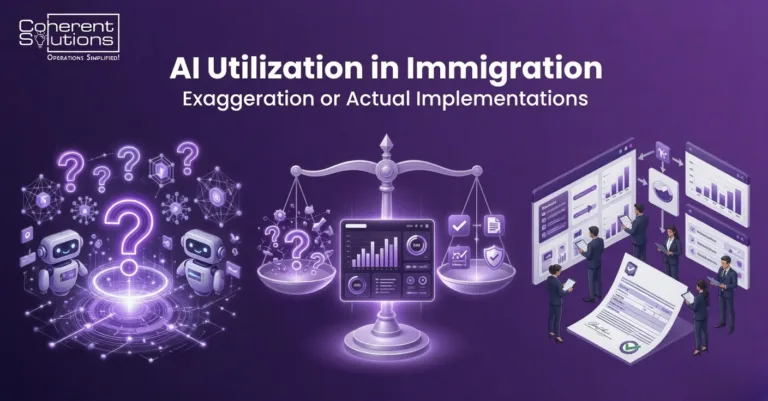
Artificial intelligence is everywhere in legal tech conversations—but in immigration law, the gap between hype and reality is especially wide. While firms are actively experimenting with AI for RFE drafting, document summarization, and client intake, the real question isn’t whether AI can be used—it’s where it can be trusted.
Let’s start with where AI actually works.
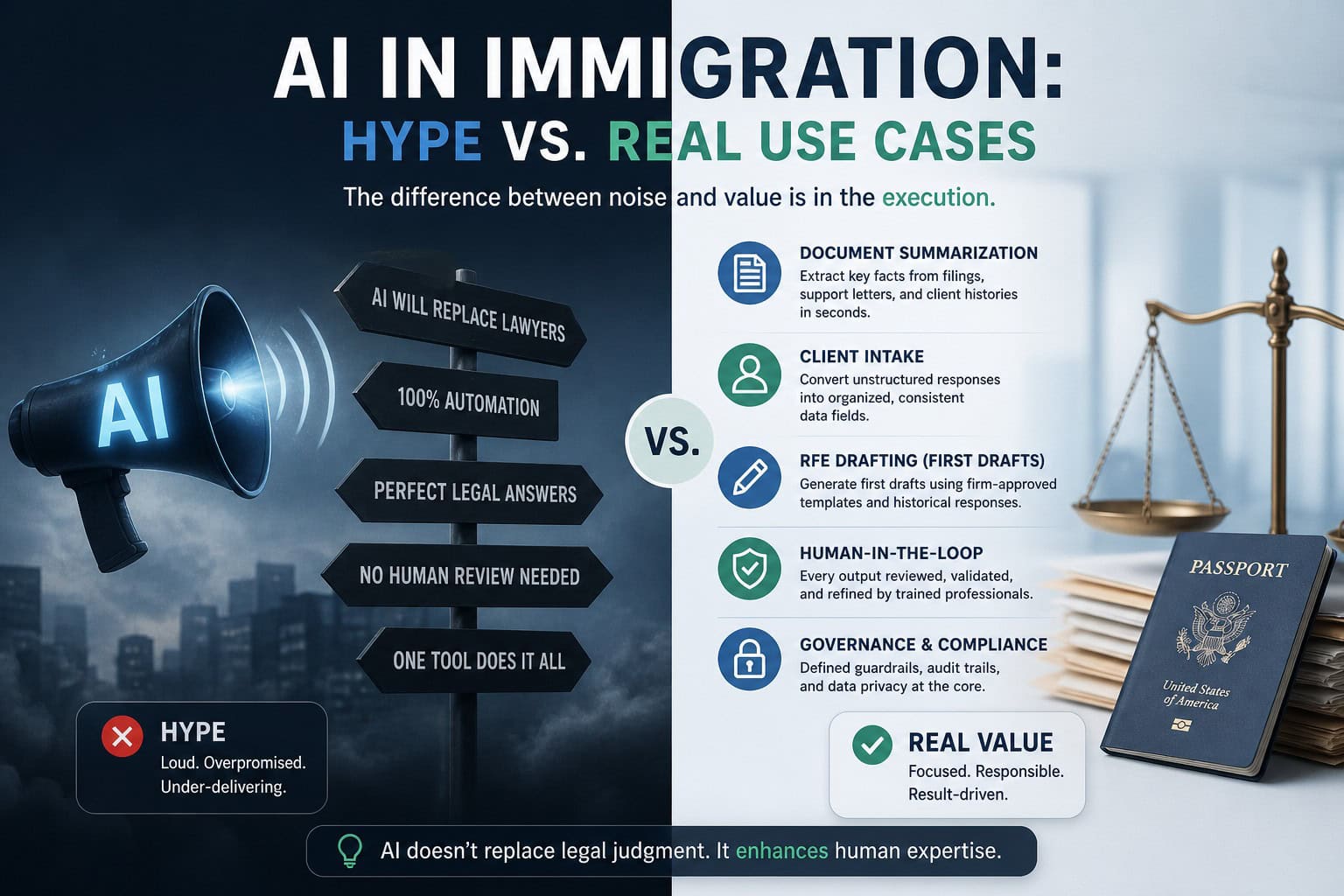
AI is highly effective in structured, repeatable tasks. Document summarization is one of the strongest use cases—quickly extracting key facts from prior filings, support letters, or lengthy client histories. Similarly, AI can streamline client intake by converting unstructured responses into organized data fields, reducing administrative burden and improving data consistency. Even RFE drafting can benefit—if AI is used to generate first drafts based on firm-approved templates and historical responses.
But here’s where things get risky.
Immigration law is nuanced, fact-specific, and constantly evolving. AI models can hallucinate case law, misinterpret eligibility criteria, or apply outdated policy standards. An unsupervised AI-generated legal argument—especially in high-stakes filings—is not just inefficient; it’s a liability. The line between “assistive tool” and “unauthorized legal reasoning” is thinner than many firms realize.
So how do firms use AI without exposing themselves to risk?
The answer lies in disciplined implementation. Safe AI adoption requires human-in-the-loop workflows, where every output is reviewed, validated, and refined by trained professionals. It requires governance frameworks—defining what AI can and cannot do, establishing audit trails, and ensuring data privacy compliance. And most importantly, it requires a mindset shift: AI is not replacing legal judgment; it’s augmenting operational efficiency.
The firms getting this right aren’t the ones chasing automation—they’re the ones designing control.
Because in immigration law, AI doesn’t fail loudly. It fails quietly—until it shows up in a denial.