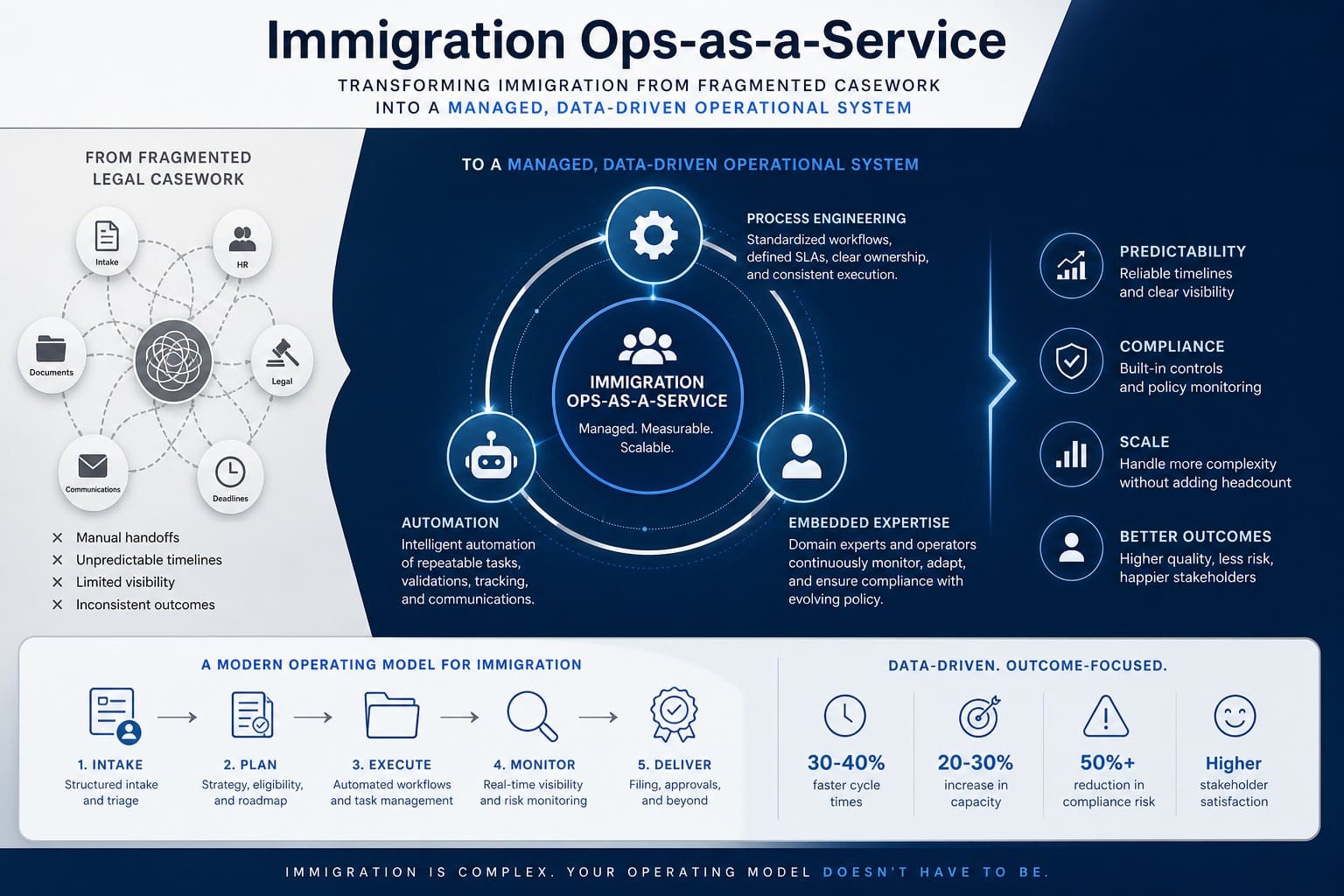
Immigration work has traditionally been treated as a series of fragmented legal tasks—case-by-case filings, reactive document collection, and heavily manual coordination between attorneys, paralegals, HR teams, and clients. The result is predictable: inconsistent turnaround times, operational bottlenecks, and limited visibility into risk or performance.
Immigration Ops-as-a-Service reframes this entirely.
Instead of viewing immigration as isolated legal casework, it transforms it into a managed, data-driven operational system. At its core, this model combines process engineering, automation, and embedded domain expertise to create a structured operating layer that sits beneath legal strategy.
Process engineering brings standardization to what has historically been ad hoc. Every visa type—H-1B, PERM, I-140, adjustment of status—is mapped into clearly defined workflows with measurable SLAs, dependencies, and escalation paths. This eliminates variability and ensures every stakeholder knows exactly what happens next, and when.
Automation then removes friction from repetitive, low-value tasks. Intake collection, RFE response drafting support, status updates, deadline tracking, and document validation can all be system-driven. This doesn’t replace legal judgment—it amplifies it by freeing professionals from administrative overload.
The final layer is embedded expertise: operators, consultants, and technologists who continuously monitor case flow, optimize workflows, and ensure compliance with evolving immigration policy. This creates a living system that adapts to regulatory change rather than reacting to it.
The impact is significant. Immigration shifts from reactive firefighting to proactive management. Law firms and corporate legal teams gain predictability in timelines, visibility into workloads, and the ability to scale without proportional increases in headcount.
More importantly, it changes the operating model itself. Instead of asking “How do we manage more cases?”, organizations begin asking “How do we design a system that can handle complexity at scale?”
Immigration Ops-as-a-Service is not just a process improvement. It is the foundation for the next generation of immigration delivery—where outcomes are engineered, not left to variability.